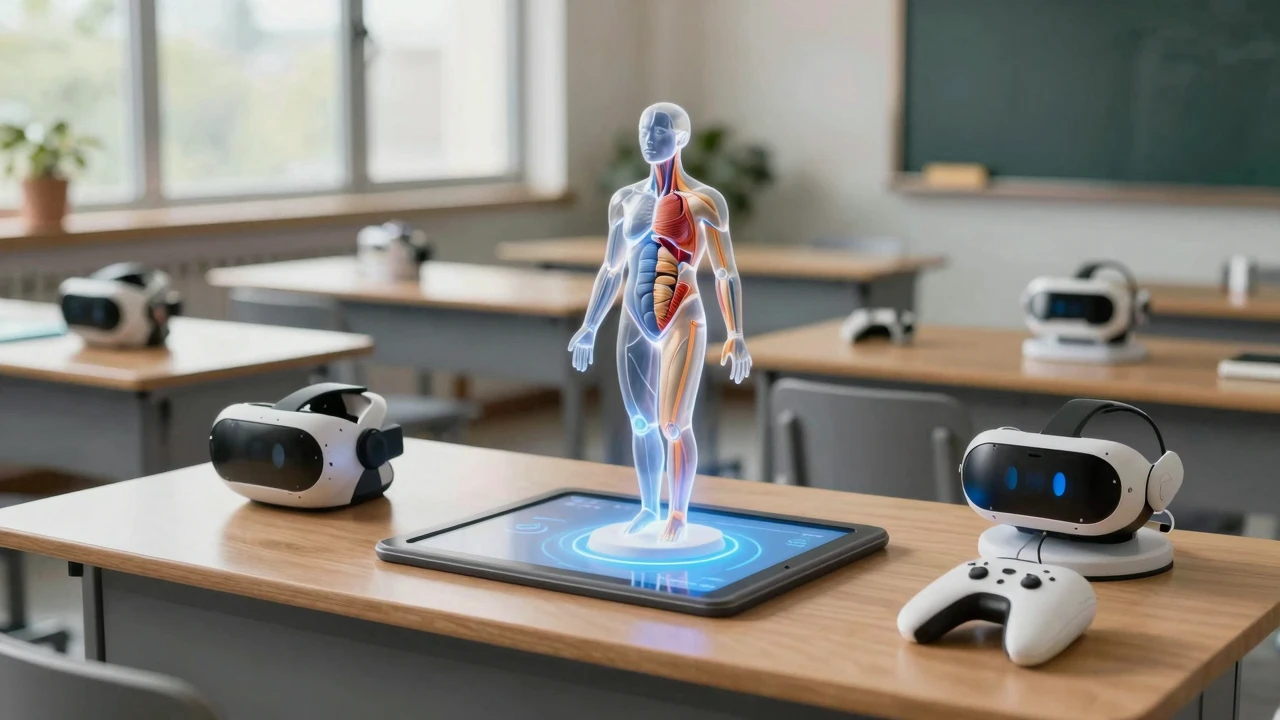
Speaking of which, I recently heard from a friend who was a teacher, saying that they had changed a new school set of teaching aids, and that the students had doubled their motivation in the course, putting him under a lot of stress. Think about it, the upgrading of teaching aids, which looks like equipment upgrades, actually has a much deeper impact on the whole of hands-on teaching than we thought.

Back in the day, the worst thing you'd ever fear was "The Paper Talker." In anatomy, the old plastic model's colour is distorted, the joints are still unwieldy, and the students can only remember their backs against the drawings. Now upgraded teaching aids, such as high-regnant silicone models, are not only handy close to real people, but also simulate different pathologies. You know what you're talking about. To be honest, the upgrading of teaching aids has turned "imagina" into "experiment," and hands-on teaching from "hearing the teacher" to "try it."
The most obvious thing is the drop in the trial error cost. In the past, the nursing profession practiced needles using ordinary rubber blocks, and it didn't feel like it, and students didn't know how strong it was. The new teaching aids now have pressure sensors, and when they are reinforced, the red light will be activated, and they will have a reblood effect. Students can practice over and over again, without fear of wasteful materials or damage to equipment. This instant feedback makes learning work.——The skills that had previously taken a week to master are now probably well understood in two days.
Honestly, it's good for the teacher, but it's not easy. In the past, when it comes to the human bone structure, the teacher had to draw on the blackboard for half a day, and the students were dazed. Now a 3-D model is produced and the students have taken it down several times, which is better than listening to 10 lessons. Teachers can focus more on answering questions and correcting errors than repeat demonstrations. However, new teaching aids are often accompanied by digital systems, and teachers have to learn how to use them first, and some older teachers have to spend some time adapting to them. It is good that most manufacturers provide training, which is a transitional period.
The upgrading of teaching aids sounds like a big deal, but the worst thing about schools is the budget. A model of high-simultaneous care is very close to 10,000, and it hurts to buy a few of them in a general school. In other words, if a student is able to work directly after graduation because of his or her teaching skills, the cost of re-training in the enterprise is saved, which is actually a cost. Some schools have adopted a "several upgrade" strategy, changing teaching aids for the core curriculum, and others slowly. It's also a way of "old for new" or a rental model with a teacher.
At the end of the day, teaching tools are just tools. I've seen schools pay a lot of money to buy smart simulators, and teachers are in trouble, locked in cabinets, and only in public classes. It's no different if the teacher doesn't work, the students don't practice. The core of hands-on teaching is "people."——How the teacher leads, how the students do it. The upgrade is just a fire to the process. It depends on how it works.
Anyway, now that I'm in a training building, I'm looking at the new models and the new equipment, I feel that the teaching is really different. At the very least, students no longer have to turn to the blueprints in the textbooks, with a hard-on carrying 206 bones out of the body.
Participation in discussions
I've been in the nursing room before, and that needle simulator really works.
To tell you the truth, you don't need a teacher. There's too many cases of ash.
Silicon-gel models do feel much better than plastic.
It's a very high cost, but I remember the school had a lease with the factory, which eased the budget pressure.
I feel like my teacher's under stress. We'll have to start over.
Those 3D models are better than drawings, but they don't look like every school has money to change.
I'm still gonna have to do it.
The old equipment I used earlier, the buttons were still in use.
There's not a lot of medical training.